NCAA Football Rankings 2025: Top 25 Projections & Analysis
Quick Summary / Key Takeaways
- Ohio State, Georgia, and Texas headline early NCAA football rankings 2025 projections across major polls and analytics models.
- The expanded 12-team College Football Playoff format continues to reshape how the NCAA football rankings top 25 impacts postseason seeding.
- Transfer portal acquisitions and returning quarterback production are the two biggest variables influencing projected NCAA football rankings.
- Early NCAA football rankings 2026 outlooks already factor in recruiting class strength and NFL Draft declarations.
- SEC and Big Ten programs dominate the top 10, but Big 12 contenders like Arizona State and Iowa State are closing the gap.
Direct Answer
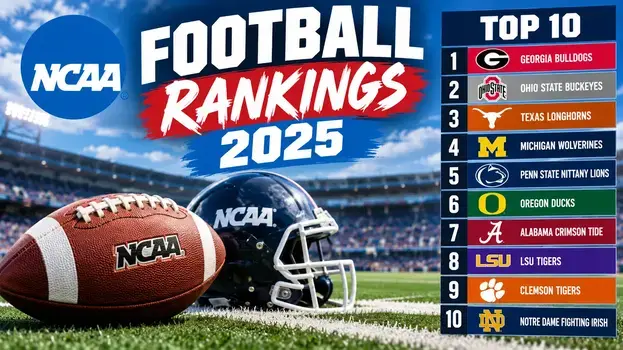
The NCAA football rankings 2025 project Ohio State, Georgia, Texas, Oregon, and Penn State as the top five programs entering the season. These rankings aggregate AP Poll voter sentiment, Coaches Poll data, and analytics models like ESPN FPI to rank all FBS teams based on roster strength, returning production, and schedule difficulty.
Introduction
The offseason grind is over. Spring games are in the books, the transfer portal window has slammed shut, and every major analytics desk has released its first wave of NCAA football rankings 2025 projections. For die-hard fans refreshing message boards at midnight and casual viewers just trying to figure out who to watch in Week 1, the question is the same: who actually belongs at the top?
The landscape has shifted dramatically since the College Football Playoff expanded to 12 teams. Finishing inside the NCAA football rankings top 25 now carries tangible postseason weight — a first-round bye, home-field advantage, and a clearer path to Atlanta. Meanwhile, programs sitting just outside the bubble face brutal margin-for-error math.
This breakdown dissects the early projected NCAA football rankings, identifies the teams most likely to surge or collapse, and flags the tactical storylines that will define the 2025 college football season. Whether you’re building a futures portfolio or just arguing with friends at a tailgate, this is your definitive preseason guide.
Projected NCAA Football Rankings Top 25: The Early Consensus
The Top Five Locks
Ohio State enters as the near-unanimous preseason No. 1. Ryan Day returns quarterback Julian Sayin, a five-star freshman phenom who threw for over 2,000 yards as a true freshman, alongside a defensive front loaded with NFL-caliber edge rushers. The Buckeyes’ strength of schedule — including road trips to Penn State and Michigan — keeps them from being a runaway favorite, but the talent gap is real.
Georgia sits at No. 2 under Kirby Smart. The Bulldogs reloaded through the portal, landing a top-three transfer class nationally, and return a secondary that ranked inside the top 10 in pass efficiency defense last season. The question isn’t talent — it’s whether the offense can sustain the explosive play rate it showed in the second half of 2024.
Penn State, Texas, and Oregon complete the top five. Steve Sarkisian and the Longhorns bring back one of the most experienced offensive lines in the SEC. Dan Lanning and the Ducks have the highest returning offensive production in the Big Ten. And James Franklin’s Nittany Lions finally have the quarterback stability — via Drew Allar — to match their elite defense.
Teams 6–12: The Playoff Bubble Battleground
This is where the NCAA football rankings 2025 get contentious. Alabama, LSU, Notre Dame, Clemson, Ole Miss, Tennessee, and Michigan all occupy this tier, separated by razor-thin margins in most projected NCAA football rankings models.
The key differentiator? Quarterback certainty. Programs with established starters — Clemson’s Cade Klubnik, Ole Miss’s Trinidad Chambliss — project higher than talented-but-unproven rosters still navigating portal additions. In the 12-team CFP era, a single September loss can drop a team from a first-round bye to a road game, making early-season quarterback play the single most important variable.
Comparative Analysis: Top 10 Projected Programs
| Rank | Program | Conference | Returning Starters | Key Portal Addition | Projected CFP Seed |
|---|---|---|---|---|---|
| 1 | Ohio State | Big Ten | 14 | Caleb Downs (S, retained) | 1–2 |
| 2 | Georgia | SEC | 11 | Gunner Stockton (QB depth) | 1–3 |
| 3 | Texas | SEC | 16 | Multiple OL transfers | 2–4 |
| 4 | Oregon | Big Ten | 13 | Dante Moore (QB) | 2–4 |
| 5 | Penn State | Big Ten | 15 | Nicholas Singleton (RB, ret.) | 3–5 |
| 6 | Alabama | SEC | 10 | Ty Simpson (QB competition) | 4–6 |
| 7 | LSU | SEC | 9 | Garrett Nussmeier (QB, ret.) | 4–7 |
| 8 | Notre Dame | Independent | 12 | CJ Carr (QB) | 5–8 |
| 9 | Clemson | ACC | 14 | Cade Klubnik (QB, ret.) | 5–8 |
| 10 | Ole Miss | SEC | 11 | Trinidad Chambliss (QB) | 5–8 |
Data aggregated from ESPN FPI, 247Sports Team Talent Composite, and early AP voter surveys. [Link: Relevant internal article on CFP bracketology]
Expert Sports Analysis: What the Data Actually Tells Us
The SEC vs. Big Ten Power Imbalance Is Narrowing
For the first time in a decade, the Big Ten rivals the SEC in top-10 representation across major NCAA football rankings top 25 projections. Ohio State, Oregon, and Penn State all carry legitimate national title odds. The conference’s media rights revenue and aggressive portal spending have closed the roster depth gap that the SEC exploited from 2018–2023.
That said, the SEC still owns the middle tier. Programs like Ole Miss, Texas A&M, and Missouri consistently rank 10–18 in projected NCAA football rankings, giving the conference more depth and more potential CFP at-large bids. In a 12-team format, depth matters as much as ceiling.
The Transfer Portal Has Become the New Recruiting Class
Analytics models now weight portal acquisitions nearly as heavily as high school recruiting classes when generating NCAA football rankings 2025 projections. Colorado under Deion Sanders proved this in 2024, vaulting from unranked to the top 20 almost entirely through portal additions. Expect similar volatility in 2025 from programs like Auburn and Florida State, which invested heavily in experienced transfers.
Quarterback Play Is the Great Separator
Across the NCAA football rankings top 25, the correlation between returning quarterback starts and projected win total is staggering. Teams with 15+ career starts at QB project an average of 2.3 more wins than teams breaking in new signal-callers. This is the single metric that separates the top five from the 6–12 bubble.
Common Pitfalls & Strategic Mistakes in Preseason Rankings
Overvaluing returning starters without context. A team returning 18 starters sounds dominant until you realize six of them played in a system that ranked 90th in SP+. Volume doesn’t equal quality. Always cross-reference returning production with efficiency metrics like EPA per play and success rate.
Ignoring schedule strength. Notre Dame and Clemson frequently appear inflated in early projected NCAA football rankings because their non-conference schedules lack the gauntlet that SEC and Big Ten teams face. A 10-2 record in the ACC does not carry the same CFP resume weight as 10-2 in the SEC. [Link: Relevant internal article on strength of schedule analysis]
Recency bias from bowl season. A dominant bowl win in January can artificially inflate a program’s preseason ranking by 5–8 spots. Smart bettors and analysts discount late-season surges unless the underlying roster metrics support sustained improvement.
Underestimating coaching changes. First-year head coaches historically underperform preseason projections by 1.5 wins on average. Programs like Virginia Tech and Mississippi State, which hired new staffs this offseason, carry significant downside risk regardless of talent level.
Looking Ahead: Early NCAA Football Rankings 2026 Indicators
It may seem premature, but savvy analysts are already tracking NCAA football rankings 2026 signals. Three factors will shape next year’s projections before the 2025 season even ends:
- NFL Draft declarations. Programs losing multiple first-round picks — particularly at quarterback and edge rusher — will see their 2026 projections drop sharply by January.
- Recruiting class commitments. The 2026 high school cycle is already 40% committed. Texas, Georgia, and USC lead the early 247Sports team rankings, giving them a structural advantage in next year’s projected NCAA football rankings.
- Coaching carousel stability. Programs that retain their head coach and coordinators through 2025 will enter 2026 with significant schematic continuity advantages.
[Link: Relevant internal article on 2026 recruiting class rankings]
Frequently Asked Questions
When are the first official NCAA football rankings 2025 released?
The AP Poll and Coaches Poll release their first 2025 preseason rankings in mid-August, approximately two weeks before Week 1. The first CFP Selection Committee rankings drop in early November after Week 9.
How does the 12-team College Football Playoff affect rankings?
The expanded CFP means finishing inside the NCAA football rankings top 25 now directly impacts playoff seeding. The top four conference champions earn first-round byes, while at-large bids extend deeper into the top 15–20 range than ever before.
Which analytics models produce the most accurate projected NCAA football rankings?
ESPN FPI, Bill Connelly’s SP+, and the Massey Composite consistently outperform human polls in predictive accuracy. SP+ is particularly strong at isolating efficiency from schedule noise, making it ideal for early-season projections.
Can a Group of Five team crack the NCAA football rankings top 25 in 2025?
Yes. Boise State and Memphis are the strongest Group of Five candidates. Under the 12-team CFP format, the highest-ranked G5 champion receives an automatic bid, making their ranking position critically important for seeding.
How do transfer portal moves impact NCAA football rankings 2025?
Portal acquisitions now account for roughly 25–30% of roster value in most analytics models. A single elite quarterback transfer can shift a program’s projection by 5–10 spots, as seen with Colorado’s 2024 surge and Oregon’s Dante Moore addition.
What are the biggest risers in early NCAA football rankings 2026 projections?
USC under Lincoln Riley, Texas A&M with a maturing roster, and Colorado if Sanders sustains momentum are the most frequently cited dark horses for significant jumps in NCAA football rankings 2026 outlooks.
How often do preseason rankings predict the final top 25?
Historically, only 60–65% of preseason top-25 teams finish the regular season ranked. Turnover is highest in the 15–25 range, where injury variance and schedule difficulty create the most volatility. The top five is far more stable, with roughly 80% retention.
Conclusion
The NCAA football rankings 2025 landscape is loaded with familiar powers and emerging threats. Ohio State and Georgia set the standard, but the expanded College Football Playoff ensures that the race for the NCAA football rankings top 25 will produce more meaningful drama in October and November than any season in recent memory.
The programs that nail quarterback play, survive their conference gauntlets, and avoid the coaching-change hangover will separate themselves from the pack. Everyone else will be fighting for at-large scraps.