How Big Is a Basketball Court? Complete Size & Layout Guide
Drawing or building a playing surface without exact specifications leads to wasted space and an unplayable layout. A single incorrect line measurement or a wrong hoop height ruins your shooting practice and makes games completely uncoordinated. This official guide provides the exact blueprints and measurements for every major basketball court league to help you build or map your project flawlessly.
Official Basketball Court Dimensions by League
Different levels of play require distinct court sizes to accommodate player speed, skill, and strategy. Professional leagues use the largest layouts, while middle schools scale down the size to fit younger athletes.
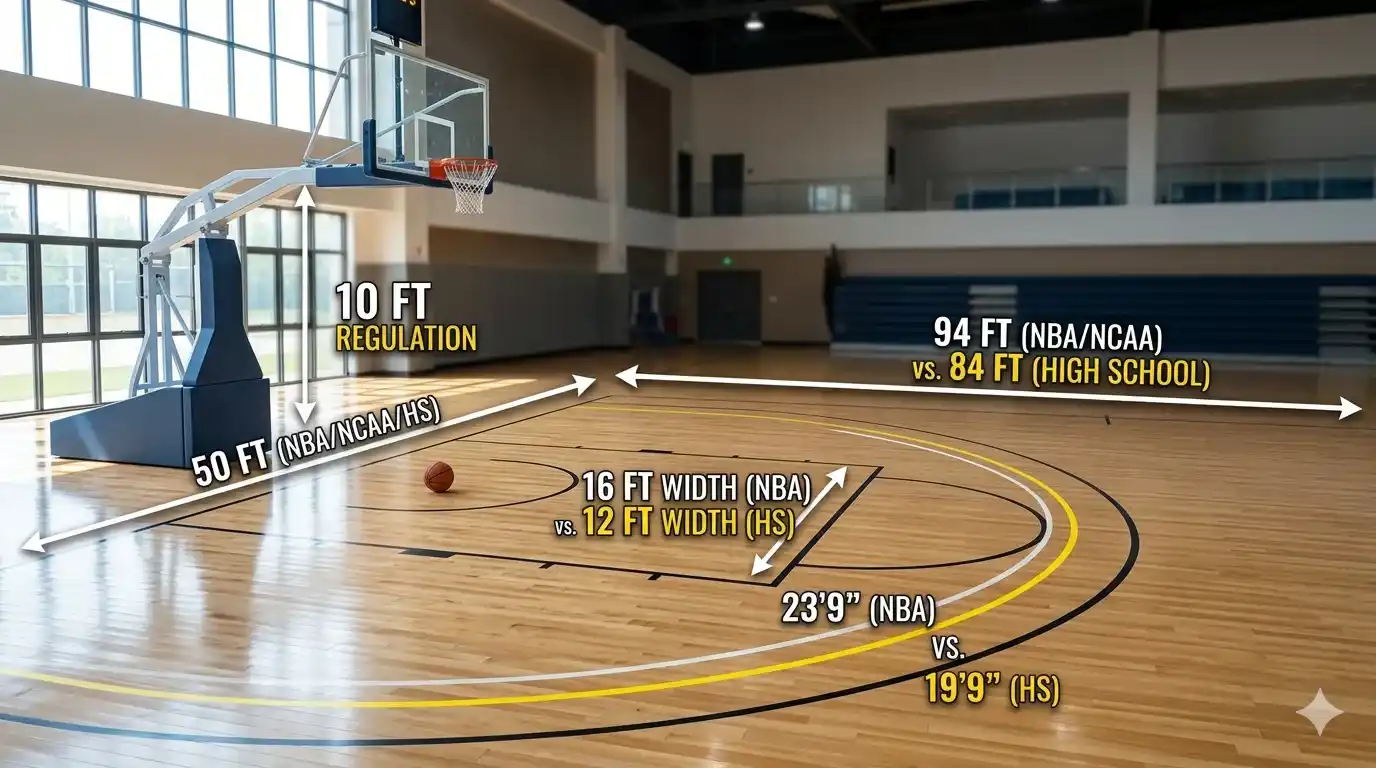
- NBA and NCAA: The standard professional and collegiate court measures 94 feet long by 50 feet wide.
- FIBA: International competitions utilize a slightly smaller metric layout measuring 28 meters long by 15 meters wide.
- High School: While maintaining the typical 50-foot width, domestic teenage leagues shorten the overall length to 84 feet.
- Junior High School: Middle school playing areas typically measure 74 feet long by 42 feet wide.
Anatomy of a Standard Basketball Court Layout
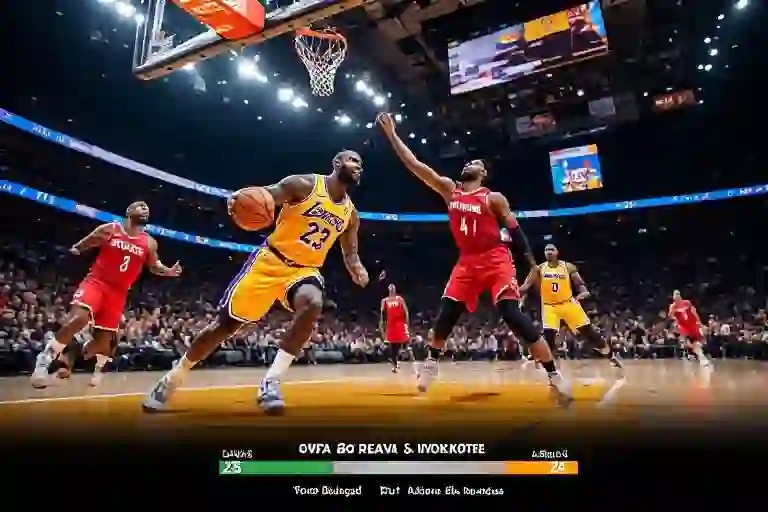
Every regulation playing surface features symmetry divided by a center line. The court includes two identical halves, each containing a hoop, a free-throw lane, and a three-point arc.
The center circle houses the opening tip-off to start the game safely. Surrounding the perimeter, the boundary lines dictate whether a player remains inbounds during live action. Understanding these core zones helps players navigate the floor and improves defensive spacing strategies.
The Key and Free Throw Lane Specifications
The rectangular area directly beneath the hoop goes by several names, including the restricted area, the lane, or the key. Players cannot stand inside this zone for more than three consecutive seconds on offense.
- NBA and NCAA Width: The lane measures 16 feet wide for professional and collegiate play.
- High School Width: Teen leagues utilize a narrower 12-foot wide key.
- Free Throw Line Distance: All regulation courts place the foul line exactly 15 feet away from the front of the backboard.
Understanding the Three-Point Line Distance
The three-point arc rewards long-range shooters with an extra point for shots taken beyond the line. The distance of this line varies dramatically depending on the league rules.
The NBA sets the furthest distance at 23 feet 9 inches from the center of the basket, narrowing to 22 feet in the corners. NCAA and FIBA leagues use a uniform distance of 22 feet 1.75 inches. High school courts bring the line closer, placing the arc at 19 feet 9 inches to match developing shooting strengths.
Standard Basketball Hoop Height and Rim Sizes
The physical assembly of the basket requires absolute precision to protect players and ensure fair shot trajectories. Rules mandate identical rim heights across all mature levels of competition.
- Rim Height: The top edge of the steel rim must sit exactly 10 feet above the playing floor.
- Rim Diameter: Every official rim features an inside diameter of 18 inches.
- Backboard Dimensions: Regulation backboards measure 6 feet wide by 3.5 feet tall to facilitate predictable ball rebounds.
Material Options for an Indoor Basketball Court
Indoor facilities prioritize shock absorption and ball bounce consistency to optimize athlete performance. Choosing the right flooring system prevents long-term joint fatigue and lowers injury risks.
Hard maple wood serves as the gold standard for any premium indoor basketball court system. Facility managers seal this dense hardwood with high-gloss polyurethane to maximize traction and durability. Budget-friendly alternative options include interlocking plastic modular tiles and rolled synthetic rubber sheets.
Best Surfaces for an Outdoor Basketball Court
Outdoor environments require rugged building materials that withstand extreme UV rays, heavy rain, and freezing temperatures. Standard indoor wood surfaces rot and warp immediately when exposed to moisture.
Concrete acts as the most durable foundation layer for an outdoor basketball court pad. Builders overlay the concrete base with specialized acrylic coatings to reduce surface slickness. You can also install perforated polypropylene tiles over the concrete base to allow immediate water drainage after heavy rainstorms.
Half-Court vs Full-Court Space Requirements
Residential properties rarely have the square footage required to pour a full-sized playing surface. In order to conserve money and space, property owners seek out smaller options.
A full professional basketball court demands at least 4,700 square feet of flat terrain. Backyard builders usually opt for a half-court layout, which requires roughly 2,350 square feet. This smaller alternative still provides ample room for full three-point shooting drills and casual three-on-three half-court games.
Official Boundary Lines: Sidelines and Baselines
Boundary markings must remain completely clear and measure two inches wide to ensure accurate refereeing. Touching any portion of these lines while holding the ball results in an immediate turnover.
The long edges running down the length of the floor are called sidelines. The shorter lines running behind each basket are known as baselines or endlines. Sidelines track player transition speeds, while baselines dictate inbound pass locations after successful baskets.
How to Draw and Paint Your Own Basketball Court
Painting a DIY court requires careful layout planning, high-quality tape, and specialized outdoor sports paint. Rushing the marking process causes crooked arcs and uneven shooting distances.
First, establish the exact center point directly beneath the rim to anchor your measurements. Use a heavy-duty tape measure and a chalk line to mark the straight boundary lines and the key walls. Rent a commercial striping machine or use custom stencil kits to paint the rounded three-point arc smoothly.
Total Estimated Cost to Build a Basketball Court
The total investment required to construct a playing area depends heavily on excavation needs, base materials, and accessory quality. Hidden costs like land clearing can quickly alter your initial budget.
| Component | DIY Backyard Setup Cost | Commercial Indoor Installation Cost |
| Concrete Slab Base | $4,000 – $8,000 | $12,000 – $25,000 |
| Flooring Surface/Tiles | $2,500 – $5,000 | $15,000 – $35,000 |
| Premium Hoop System | $1,000 – $2,500 | $4,000 – $9,000 |
| Professional Line Painting | $300 – $600 | $1,500 – $3,000 |
| Total Estimated Investment | $7,800 – $16,100 | $32,500 – $72,000 |
Frequently Asked Questions
What are the exact dimensions of an official NBA basketball court?
An official NBA basketball court measures 94 feet in length by 50 feet in width. The total playing area encompasses exactly 4,700 square feet of surface space.
Is the size of an NBA court the same as that of a high school basketball court?
No, a high school basketball court measures 84 feet long, which is 10 feet shorter than an NBA floor. Both court types share the exact same width of 50 feet.
How high is a regulation basketball court rim from the ground?
The top of the rim sits exactly 10 feet above the playing surface. This standard height applies to high school, college, and professional leagues.
What is the distance of the 3-point line on a basketball court?
The distance changes by league, measuring 23 feet 9 inches in the NBA and 22 feet 1.75 inches in NCAA play. High school courts place the line at 19 feet 9 inches.
Why is the painted area under the hoop called the key?
Early basketball court designs used a narrow 6-foot lane that resembled a skeleton keyhole when paired with the free-throw circle. Even after leagues enlarged the road to its present dimensions, the name remained.
Can you build a backyard basketball court directly on top of grass?
No, you cannot build a reliable court directly on top of raw grass or soil. The ground shifts constantly, which ruins ball bounce consistency and causes severe trip hazards.
Ready to bring your dream sports setup to life? Grab an accurate tape measure, pick your ideal construction materials, and start mapping out your playing area today. For specific step-by-step equipment recommendations or structural advice, leave a comment below or connect with our facility design team.